

Deloitte colleagues enjoying lunch at the Expo: Ellen, Patsy, Pete, David, Hui, and I
Deloitte’s AsiaPac Heatlhcare Meeting is a way to bring together partners globally who are invested or interested in the firm’s healthcare capabilities in Asia. An impressive 40 partners or so were able to join for the event including previous teammates from a few of my emerging markets projects: Andrew Chen (also hosting the event), Sudeep Krishna, and Karel Bakkes from the China, India, and Netherlands practices. I also have to admit, that they were all very patient with me talking their ears off about Project HOPE, diabetes / chronic disease research, and my general enthusiasm for public-private interventions for global health. As some of my strongest mentors and allies through challenging client engagements, late nights, and energetic brainstorming sessions – I needed to borrow their brains for ideas and feedback!

The Deloitte AsiaPac team was fabulous at hosting and leading the event!
With the World Expo having opened just a two week prior, we were scheduled Thursday morning to explore the famed Expo for a few hours – how exciting! I had never been to an Expo, nor did I at the time really understand the purpose (anyone?). I decided to do some research and discovered that the World Expo, then called the "Great Exhibition of the Works of Industry of All Nations,” started in London in 1851 as an “international exhibition of manufactured products” – an information sharing fair that would stimulate the development of several aspects of society including art and design, education, international trade and relations, technologies, and tourism. Today re-branded as the World Expo, it is a tourist attraction of its own – especially with how much China has invested in the event infrastructure.

With the World Expo in town it’s impossible to escape one thing: Haibao. Haibao is the mascot of the Expo and present ALL OVER Shanghai (in an unbelievable way): Haibao posters, shrubs, lights, stuffed animals, public art, food and jewelry! HaiBao was even in the Shanghai Children's Medical Center!
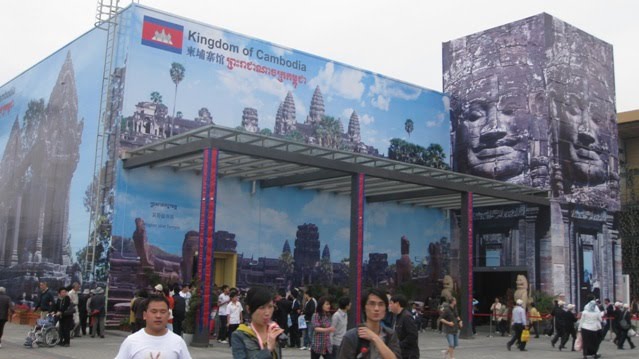
For some reason I had imagined that the Expo was a huge tent with “booths” for each country (all of which I had heard had long lines). What I discovered was that each country had enormous pavilions (NOT booth), which were possibly the most elaborate temporary structures I have seen to date. I hope they reuse a lot of the decorations for some modern restaurants and hotels in 6 months! The lines were indeed very long for the most popular pavilions (anywhere from 2-4 hours) so we prioritized seeing more of the Expo grounds and went in only the pavilions with the shortest lines (we liked Cambodia the best!).
Our last stop was by far the largest and most dramatic pavilion, China! This was clearly a permanent structure that was impressive in every aspect of the design and execution. You actually have to arrive early in the morning to reserve a special ticket for this pavilion, but I’m hoping this will be around for a few years after the Expo leaves China as an ongoing tourist attraction. The design was especially impressive; even the escalators beneath the structure reinforced the lines/design of the building.

Friday was spent in a full-day meeting with many of Deloitte’s AsiaPac partners in Healthcare. I was brought in as a presenter to speak on our relationship with Project HOPE and some of the strategy we are working on this summer with respect to chronic disease. The response from the group was very encouraging! While I did do a small “pitch” for why chronic diseases are important in developing countries, I felt that there was a strong validation of the importance and relevant implications for our clients. We are all working towards the same goal of helping patients either through corporations, governments, or non-profits – it has been only beneficial to work across each stakeholder to understand (1) what the needs are (2) how to coordinate so that efforts are streamlined, not duplicated and most importantly (3) so we can achieve these goals collectively!

Before leaving Shanghai on Sunday, I was thankful to have some quality time for sightseeing in the city. On Saturday morning, I met up with a group of Berkeley MBA admits for brunch (a ladies brunch!) along with a Deloitte colleague from the Shanghai office. Emma (far left) then took me to the fabric markets which was indescribably impressive - sadly no room in my carry-on for a coat, suit, dress, and custom-tailored work shirts. David and Patsy Buldoc took me shopping for "Cartier" watches – quite an experience and somewhat reminiscent of Chinatown New York (but way more selection and in Mandarin!). My last night in Shanghai, Hui took me out for a traditional “hot pot” dinner and iced tea. The rice-pumpkin puffs and Chinese eggplant were amazing!

Thanks to some needed down-time, I’m rapidly gaining an appreciation for the country’s diversity in culture, food, history, customs, and traditions. In addition to an extremely productive first week with Project HOPE China, I’m so grateful for all those that made this a memorable and adventurous experience!





